The most unpleasant part of gardening is pest control. Pests are a nuisance and the process of controlling them can be even worse. On top of all
that, some methods of pest control can be dangerous to the gardener and to the garden if used carelessly. Gardeners who grab a can of bug killer
every time they see an insect do the worst damage. Safe and effective pest control requires an extensive knowledge of garden pests and pest
controls, and a careful adherence to important rules.
The safest and most effective way to control pests is to follow the principles of Integrated Pest Management (IPM).
1. Avoid plants that are insect or disease prone. There are a number of landscape plants that I never recommend because they regularly have
problems with insects or diseases. I have not included them in my lists of trees, shrubs, vines and perennials. There are also certain varieties of
fruits, vegetables and ornamentals that are more resistant than average.
2. Place plants where the conditions are suitable. Plants are much more susceptible to insect and disease problems when they are stressed.
Planting them where they get their optimum amounts of sunshine, temperature, water and soil pH will help them to thrive.
3. Improve soil so roots get air, water and nutrients. A healthy root system is vital for a healthy plant. Soil includes an ecosystem of
bacteria, fungi and larger microorganisms, some good and some bad. The good ones predominate in soils with good aeration and drainage, but the bad
ones predominate in soils with poor aeration and drainage. Most soils benefit from applications of organic matter every year or two to encourage
beneficial microorganisms.
4. Avoid stress from too much or too little water. Both too much and too little water are hard on plants, but I think more plants are killed
by too much water. When there is too little water, the leaves droop and it is obvious that they need to be watered. When there is too much water
and the soil is constantly wet, crown rot or root rot sets in and the only visible symptom might be yellowing of some leaves. By the time the
leaves droop, the roots are already dead and the plant cannot be saved. The surest way to diagnose crown rot is to slice off some of the bark near
ground level. If the wood is dead brown at ground level and still green above then it is definitely crown rot that killed the plant.
5. Scout regularly for pest problems. Pests are easiest to control when they first appear and are still few in number. Checking for problems
on a weekly basis helps prevent bigger problems later. This also helps the gardener know what plants normally look like so it is easier to detect changes.
6. Choose controls with minimum side effects, including introducing natural predators. My favorite control for insects is to smash them. It
is 100% effective and there is no harm to beneficial insects. My favorite control for diseases is to water the soil and keep the leaves dry or to
water the leaves early enough in the day so they dry quickly. The longer the leaves stay wet, the more time for disease spores to germinate and
infect the leaves.
7. Use pesticides as a last resort. There are a number of cultural controls that can keep pests in check, but there are also times when
pesticides are needed to prevent damage, but these should be chosen carefully to make sure that there is minimal damage to plants, and beneficial
insects and microorganisms.
A very helpful source of information on Natural Yard Care and Integrated Pest Management is found online at
GrowSmartGrowSafe.org which includes natural controls and chemical controls for insects, diseases, slugs & snails and weeds. Pesticides are
rated Lowest Hazard, Low Hazard, Moderate Hazard and Highest Hazard. The website can also search for pest controls by pest, by crop or by
application area.
1. Identify the pest. The most important step of pest control is to recognize the problem. Sometimes it is obvious, such as a caterpillar
chewing a hole in a tomato. Sometimes it is not obvious, such as one plant that is off color and not growing as fast as others in the yard.
The key to identifying pests is to be very observant. If one side of a plant is a different color than the rest, then observe whether it is the
sunny or shady side or the wetter or dryer side or if the soil has been disturbed on that side. It might be that a shade loving plant is getting
sunburned or a sun loving plant is starving for sun. It might be that the soil is too wet or too dry. It might be that the roots have been
damaged by gophers or by digging. Occasionally the problem will be that the soil has been poisoned by a gas leak or that there were fumes from a
weed killer applied on a hot day. Since branches are mainly fed by the roots directly beneath them, one side of a plant may be affected while the
rest is normal.
Holes in the leaf are usually caused by insects but shothole disease will also cause holes because the infected spots stop growing and tear out as
the rest of the leaf continues to expand. It is necessary to observe the early stages of the damage to identify shothole disease.
Once a problem is noticed, information is available on the internet, especially the websites listed above.
2. Decide if the pest is serious enough to justify controlling it. Plants can lose ten percent of their leaves without it having any
significant effect on plant growth. Blemishes on fruits and vegetables might not even affect their flavor or appearance, especially if they will be
peeled before being used.
How the plants are being used affects how much damage is tolerable. Flowers providing color in the flowerbed do not have to be as nice as cut
flowers for the table.
Lawns can have up to 15 common crane fly larvae per square foot without any visible effect on the lawn. I never bothered to treat my lawn for
crane fly larvae because I knew that before it turned brown, a flock of starlings would show up and have a feast.
3. Apply appropriate control measures at the proper time. Different controls are very effective for some pests and no help at all for
others. That is why it is so important to correctly identify the problem. It is also just as important to be familiar with different control
measures to know which are effective against that particular pest with minimal negative effects.
Timing is very important. Pre-emergent herbicides have to be applied before weeds appear while post-emergent herbicides have to be applied to
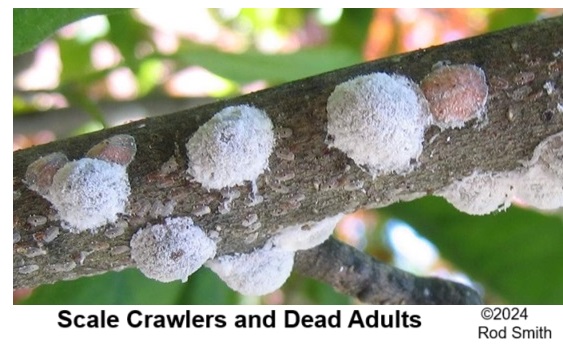
growing weeds. Also, some pests are much easier to control at certain stages of their life cycle. For example, several insecticides will control
scale insects at the crawler stage when they hatch out and are looking for a place to attach themselves to the plant. But, once they are attached,
they cover themselves with a waxy coating so most insecticides have no effect. Also, after scale insects have laid their eggs and died, there is no
benefit from spraying them.
For large numbers of plants or insects, sprays may be the only practical control. It is very important to read and follow the instructions. The
label will list which pests it controls, which places and plants it is approved for and how to mix and apply it. Millions of dollars are spent in
testing each product for each pest on each plant on the label to determine safety and effectiveness. Several times I have heard of someone who has
severely damaged his plants by using the wrong product, so read the label carefully.
It is illegal to use any pesticide in a manner that is inconsistent with the label. The Oregon Department of Agriculture regularly collects stiff
fines from pesticide applicators who violate the label.
Many people have the idea that organic pesticides are safer than synthetic pesticides. This is not true. Toxicology testing shows that they are
comparably poisonous. Organic pesticides usually break down quicker so they do not build up in the environment, but they also have to be applied
more often.
Some people think that home remedies are safer than commercial pesticides. Apparently they are lulled into complacency because the products are
familiar. But some of the home remedies I have seen are many times more toxic than commercial products, and there is not the extensive testing to
back up the claims.
4. Follow up to see if the pest control was effective or more treatment is needed. It may be that the pest was misidentified. Sometimes two
pests will be present at one time so additional treatment is needed.
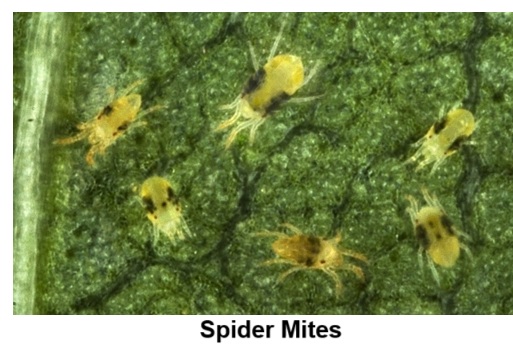
Some products require two applications to be effective. For example, some miticides will kill spider mites but not the eggs. At summer
temperatures, it takes only seven days for an egg to turn into an egg laying adult. A second spray is required to kill the mites that hatch after
the first spray but before they start laying eggs. Since the first spray also kills the natural predators on mites, they will come back worse than
before if the second spray is not applied. Gardeners who spray once a month have more trouble with spider mites than gardeners who never spray.
This last step is very much like the first step. Careful observation and regular scouting for pests is necessary for effective pest control.
These same steps should be followed whether the pest is insect, disease or weed.
Insects
Hundreds, perhaps thousands, of different kinds of insects are likely to be found in gardens every year. The presence of insects does not mean that
there is a problem. Only about one tenth of all kinds of insects cause damage. Some insects just rest on plants then fly off without causing any
damage. Some insects are beneficial because they eat insects that cause damage. A guide to beneficial insects with pictures can be found at
GrowSmartGrowSafe.org by clicking on Good Bugs.
Holes in leaves are not always caused by insects. Holes may be caused by shothole disease or by slugs.
Identify the pest
While
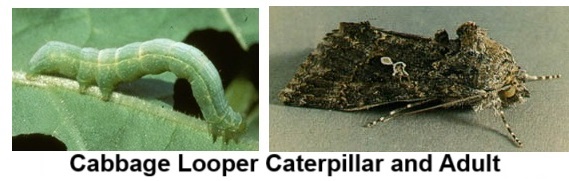
there are so many different kinds of insects, they are divided into a few groups based on their characteristics. Some go through complete
metamorphosis, that is, a great change from the larva stage through the pupa state to the adult. Larvae of moths and butterflies are caterpillars.
Larvae of flies are maggots. Larvae of these insects often damage plants but the adults do no damage other than laying eggs. Beetle larvae are
grubs. Both the grubs and the adult beetles might damage plants.
Other insects go through incomplete metamorphosis. The eggs hatch into young nymphs that look the same as the adults except that adults have wings
and can mate. Grasshoppers have chewing mouths while true bugs and aphids have piercing/sucking mouths. Some true bugs do damage as larvae while
others do damage as adults and some do damage at both stages.
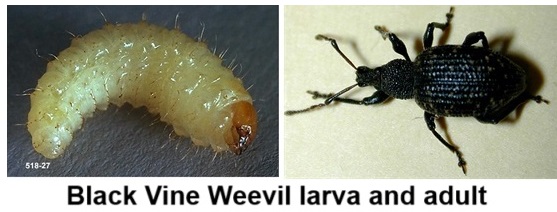
Some
chewing insects leave holes in leaves or eat the entire leaf. Examples are caterpillars and beetles. Leaf miners chew tunnels in leaves while
borers and bark beetles chew tunnels through wood.
Sucking
insects pierce leaves and stems and suck out the sap or cell contents. This might leave discolored spots of local damage or it might weaken the entire plant.
Mites are not insects, but are closely related to spiders, and have sucking mouths. Damage is done by both nymphs and adults.
Slugs also make holes in leaves, but the edges of the holes are ragged because their teeth are on their tongues.
Controlling Insects with Integrated Pest Management (IPM)
There
are many ways to control insects other than spraying poisons. Physical barriers can be effective controls. A copper strip forms a barrier that
slugs will not cross. A cardboard cylinder around a young transplant will keep cutworms away. Garden blankets are finely woven but lightweight
plastic fabrics that are put over a garden. They prevent flying insects from reaching the plants. An agriculture development worker in Thailand
said that they put a plastic foam bag around every young tree fruit which kept away insects and was then used for protective packing at harvest time.
Practicing
good sanitation that removes fallen fruit and leaves will remove many overwintering insects. Removing weeds can remove places where
insects hide. Tilling the garden in the fall to bury crop residues suffocates many garden insects while exposing others to freezing and to predators.
Rotating crops to different parts of the garden each year also helps to starve insects.
Traps
can be very selective and effective for controlling small numbers of insects. Commercially made traps are available that use sexual attractants
so they are very selective. A yellow sticky paddle is an excellent trap for many insects. Smearing Tanglefoot, a sticky wax, on a red ball and
hanging it in an apple tree can make an excellent trap for apple pests. A trap for fruit flies can be made from a milk jug by putting in it a quart
of water, a cup of sugar, a tablespoon of vinegar and a banana peel. While traps might not control large numbers of insects, they will indicate how
many of which kind of insects are present and when it is time to spray.
Biological controls can be very selective and effective control. B.T., which stands for Bacillus thuringiensis, is a bacteria that infects
caterpillars and quickly kills them but has no effect on other animals. Milky spore disease targets Japanese Beetles. Beneficial nematodes are
microscopic worms that kill insects in the soil but have no effect on other animals. Parasitic wasps lay eggs in caterpillars which are soon
immobilized and killed. Ladybugs, or more properly Ladybird Beetles, have a voracious appetite for aphids, scale insects and mealybugs. Praying
Mantises will eat aphids as well as any other insects they can catch. Green lacewing larvae eat lacebugs and other insects. These biological
controls are available for purchase to be released in the yard. Other biological controls are spiders and birds. Birds will be attracted to a yard
if there is a birdbath next to a large shrub.
Companion plants are another biological control. Planting marigolds or tomatoes in the garden reduces the number of aphids because they both
contain natural aphid killers. Nasturtiums attract aphids away from other plants. Then the nasturtiums can be sprayed instead of spraying everything.
New varieties of plants have been bred to be resistant to certain insects. Plants can also be made somewhat more resistant to insects by keeping
them in good health. Borers and bark beetles are especially attracted to plants that are under stress. Proper soil preparation, fertilizing and
watering to reduce stress will help plants ward off insects.
Sometimes all of the above do not keep insects in control so chemical controls are necessary. Many chemical controls are broad spectrum so they kill
a wide variety of insects, both destructive and beneficial. Some are more selective. Some can be used on edibles as well as ornamentals but some
are limited to only ornamentals.
Acelepryn is the least hazardous of any synthetic insecticide. It does not even require a Caution label. It is effective on a number of caterpillars,
beetles, flies and true bugs, but is not very hazardous to beneficial insects.
Malathion and Sevin are broad spectrum insecticides that can be used on edibles as well as ornamentals. Malathion is one of the safest for humans
of any of the chemical insecticides, synthetic or organic. However, it can cause damage to ferns and maples. Sevin is especially effective on
caterpillars and beetles.
Pyrethrin, neem oil and horticultural oil are broad spectrum organic insecticides which can be used on edibles or ornamentals, while spinosad is a
more selective organic. Horticultural oil is also a miticide. For certified organic products, look for the Organic Materials Review Institute
insignia: OMRI. There are also several synthetic pyrethrins, such as permethrin and others all ending in -thrin, which are broad spectrum
insecticides. Check the label to see if they can be used on edibles.
Acephate and Imidacloprid are systemic which means that they will absorb into the plant and move to areas that were not sprayed directly, even to
the tops of trees. This makes them more effective but it also means that they cannot be used around edible plants.
Insects can become resistant to insecticides, especially if the same one is used every time. Rotating between three or four pesticides is a good way
to prevent resistance. Choose pesticides with different Group numbers.
Sprays for insect control are effective for anywhere from three days for some organics to three weeks for some systemics. Sprays will kill insects
within minutes or hours. For these reasons, insect sprays should not be applied until insects are present for maximum control and minimal side effects.
Since insects usually hide on the underside of the leaves, it is important to spray up to cover the underside of the leaves. Oil sprays have to be
sprayed directly onto the insects. Other sprays will kill insects when they walk across sprayed leaves. Systemic insecticides will soak into the
leaves and move around to protect areas that the spray did not cover. For full coverage sprays, the spray is applied until the leaves just start to drip.
An excellent resource for identifying and controlling insects is the PNW Insect Management Handbook published by the Extension Services of Oregon,
Washington and Idaho. A copy can be purchased at local extension offices and online, or the information can be found on the internet at
http://pnwhandbooks.org/insect
Slugs
Slug control begins with removing places where slugs reproduce and hide from the sun. Low decks and litter are favorite places for slugs. Also,
beds of round river rock are perfect breeding grounds for slugs. Metaldehyde, iron phosphate and sodium ferrric EDTA are all good for slug control.
Metaldehyde is a little more effective but iron phosphate and sodium ferric EDTA are much safer for pets. All should be scattered and never put in
piles where pets might eat them.
I have found that slug bait is most effective when it is applied in early spring when hosta buds are about one inch tall. This indicates the soil
is warm enough that slugs are active, but there is not much for them to eat. Applying slug bait at the maximum rate at that time will usually
prevent slug damage for the spring and most of the summer.
Common Pesticides
I have personally used most of these active ingredients in the list below but the brands that I used were agricultural or commercial brands. The
brands I listed below are the same active ingredients in brands that are likely to be found in local garden centers. In other parts of the country
these same active ingredients are likely to be found in products by Ferti-lome, Hi Yield or Ortho.
Always check labels for approved uses. The label is the law. It is illegal to use a pesticide in a manner inconsistent with its label. The label
will tell if it can be used in residential areas, indoors or outdoors, what plants it can be applied to or cannot be applied to, what insects it
controls, how to mix it and how to apply it. The label will also tell what personal protection equipment is required. Long sleeves, long pants,
shoes and socks are the bare minimum for every pesticide. It will also list the environmental hazards and if it kills bees and other pollinators.
This list of pesticides, no doubt, will be outdated in a few years. Most of the pesticides I used forty years ago have been removed from the
market because of safety concerns. Also, labels are changed occasionally. A good example is when neonicotinoid insecticides could no longer be
used on linden trees after 50,000 wild bees were killed in Wilsonville, OR, even though the insecticide was applied according to the directions on
the label. Apparently the manufacturer's testing had not revealed that the pesticide was deadly to wild bees which are also feeding on the somewhat
poisonous nectar of linden trees. The spray applicator was not fined because he had correctly followed the instructions on the label even though
the label turned out to be wrong. Let this be a warning to anyone who wants to try an off-label use. So read and follow the label carefully.
Active ingredient	Brandname		   Natural/  Use on   Comments
INSECTICIDES				           Organic   Edibles
Acephate                Bonide Systemic Insect Control   N   N   Systemic
Acetamiprid		Rose and Flower Insect	         N   N
Azadirachtin		Bio-Neem		         Y   Y   Also a Fungicide
Bacillus thuringiensis	B.T.			         Y   Y   Bacteria that kills caterpillars
Beauveria bassiana      BotaniGard, Mycotrol             Y   Y   Fungus that controls aphids, beetles, thrips, whiteflies
Bifenthrin		Ortho Bug B Gon	     	         N   Y
Canola Oil		Monterey Take Down Garden Spray  Y   Y   Also a Miticide
Carbaryl		Sevin			       	 N   Y   Most effective spray for caterpillars
Chlorantraniliprole     BioAdvanced Grub Con., Acelepryn N   N   Not a hazard to humans or pets
Cyfluthrin		BioAdvanced Vegetable and Garden N   Y   Broad spectrum, lasts for months
Horticultural Oil       Hi-Yield Dormant, Volck Oil      Y   Y   Also a Miticide
Imidacloprid		BioAdvanced Complete Insect	 N   N   Systemic, lasts two years
Malathion		Ortho Malathion	        	 N   Y
Neem Oil		Safer Neem Oil, Natria Neem Oil  Y   N   Also a Fungicide
Potassium Salts of	Safer Insect Killing Soap	 Y   Y
      Fatty Acids
Pyrethrins		Bonide Pyrethrin	         Y   Y   Quick acting organic
Silicon Dioxide		Diatomaceous Earth	         Y   Y
Spinosad		Captain Jack's Deadbug Brew	 Y   Y   Produced by a bacteria

MITICIDES
Cottonseed, Clove,	Mite X			         Y   Y
      & Garlic Oil
Horticultural Oil       Volck Oil, Monterey Horticu. Oil Y   Y   Also kills scale

FUNGICIDES
Basic Copper Sulfate				         Y   Y   Also controls Bacteria
Beta-Pinene		Wilt-Pruf		         Y   N   Protectant, not a fungicide
Chlorothanonil		Daconil			         N   Y   Might cure a recent infection
Copper Octanoate	Liquid Copper Fungicide	         Y   Y   Also controls bacteria
Myclobutanil		Spectracide Immunox		 N   Y   Can cure a recent infection
Phosphorous Acid        Monterey Garden Phos             N   Y   Systemic
Propriconozole		BioAdvanced Fungus Control       N   N   Can cure a recent infection
Sulfur			Safer Garden Fungicide           Y   Y   Protectant
Triticonozole		Ortho Rose & Flower Disease Con. N   N   Can cure a recent infection

BIOFUNGICIDES
Bacillus subtilis       Serenade Disease Control         Y   Y   Beneficial bacteria
Streptomyces lydicus    Actinovate, Cease                Y   Y   Beneficial bacteria

SLUG & SNAIL
Iron Phosphate		Sluggo			         Y   Y   Safer for pets
Metaldehyde		Deadline, Corry's Slug & Snail   N   Y
Sodium Ferric EDTA	Safer's Slug & Snail	         N   Y   Safer for pets

PREDATORS			TRAPS AND LURES	 	        ANIMAL REPELLANTS
Beneficial Nematodes            Pheromone Lures	        	Bird Netting and Flash Tape
Green Lacewing			Yellow Jacket Traps	        Deer Repellent
Ladybird Beetle			Yellow Sticky Traps             Scarecrows
Praying Mantis
Diseases
Diseases
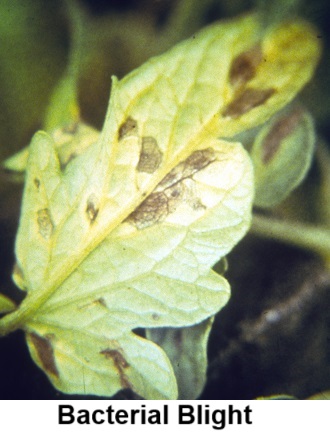
might be caused by bacteria, fungi or viruses. Bacteria are one-celled animals that multiply by dividing. Bacterial diseases include leaf
spots, blights and wilts. Diseased areas are usually black. Bacterial leaf spots have irregular margins because bacteria diseases usually do not
cross leaf veins.
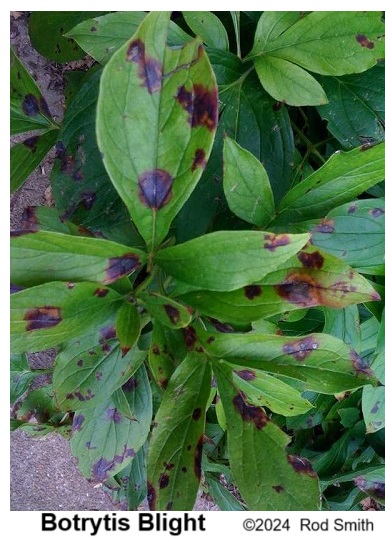
Fungal diseases resemble plants in the way they grow. They are spread by spores which, like seeds, germinate and grow into the plant when a film
of water is on the leaf. Fungal diseases include leaf spots, mildew, mold, crown rot and rust. Fungal leaf spots are usually round, sometimes
with a dark edge like a bullseye. Most fungi are very specific in infecting only a few plants but a few will infect many kinds of plants.
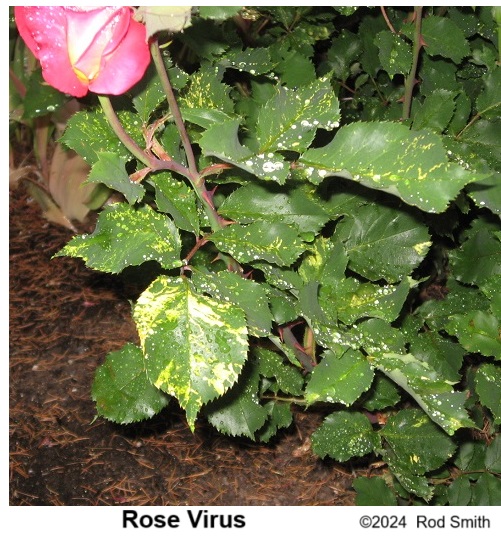
Viruses usually produce yellow streaking and speckles on leaves. They are usually spread by insects or by taking cuttings from infected plants.
They can also spread by root grafts when roots from different plants cross over each other and grow together. Sometimes, careful fertilizing and
watering can hide the symptoms, but the only cure is to remove and destroy virus infected plants, although some plants, such as Fragrant Daphne,
tolerate certain viruses.
Identifying Diseases
Spots on the leaves might be caused by bacteria, fungi or viruses. Wilting and blackened leaves and twigs are usually caused by bacteria. When an
entire plant wilts while the soil is moist, it is either root rot or crown rot, which might be caused by bacteria or fungi. Crown rot causes the
wood at ground level to turn brown while the wood in the branches is still
green. Often there are dark streaks in the wood. Always check soil moisture before watering a wilted plant, because watering only makes crown rot
worse.
The websites listed at the beginning of this article have excellent colored pictures and descriptions to help identify diseases.
Controlling Diseases
Avoid
plants which are disease prone. Look for varieties which are disease resistant. For example, tomato varieties with VFNT after the name are
resistant to verticillium wilt, fusarium wilt, nematodes and tobacco mosaic virus.
The
Pacific Northwest Pest Management Handbooks has Cultivar Susceptibility
Tables for some fruits, vegetables and ornamentals.
Place plants where growing conditions are favorable to reduce stress. Avoid combining plants which prefer dry soil with plants which need moist
soil. The plant lists on this website include preferences for sun or shade, moist or dry.
Crown rot and root rot are common plant killers, but can easily be controlled by proper planting and watering. Susceptible plants, such as heather,
daphne, tulips and Japanese maples should be planted on a mound or slope. Always position the crown of a plant an inch above surrounding soil so
water does not collect at the trunk. Never cover the branches or more than an inch of the trunk with mulch. Let the soil dry out between waterings.
Always check soil moisture before watering a wilted plant, because watering only makes crown rot and root rot worse.
As with controlling insects, good sanitation and crop rotation helps control diseases. One difference from controlling insects is that very few
sprays will control a disease once it gets into a leaf. Usually, there is no treatment to get rid of diseases other than to remove and destroy
infected leaves, branches or plants. Infected twigs should be removed three to six inches below where symptoms are showing.
Keeping the leaves dry helps prevent disease spores from growing. Unfortunately in the Pacific Northwest, rain comes frequently in the spring when
there is soft new growth that is easily invaded by disease.
For these reasons, sprays for disease control are usually applied when the weather conditions are right for diseases rather than waiting for
disease symptoms to appear.
Copper based products are effective for controlling bacteria as well as many fungal diseases. Some bacterial diseases can be prevented by a
beneficial bacteria, Bacillus subtilis.
Clorothalonil is a broad spectrum fungicide. Myclobutanil, Propiconazole, Tebuconazole and Triticonozole are especially good for powdery mildews,
rusts and leaf spots. They will penetrate into the leaf and cure an infection if it is recent.
Phosphorous
Acid fungicides are very effective on many diseases and can be used on ornamentals and edibles. They are also systemic.
Sulfur,
neem oil and jojoba oil are natural fungicides. Coating leaves with Wiltpruf, which looks and acts like Elmer's Glue, can prevent disease
spores from reaching the leaves by coating the leaves with a clear, hard coating.
Bacillus subtilis and Streptomyces lydicus are beneficial bacteria that produce natural fungicides which are effective in preventing a number of
diseases on fruits, vegetables and ornamentals.
When spraying for diseases, it is not as necessary to cover the underside of the leaves because bacteria and fungus spores normally drift down and
land on the topside of leaves. However, some diseases which over winter in the soil can be splashed up by raindrops onto the bottoms of the lower
leaves. A layer of coarse mulch helps prevent splashing.
An excellent resource for identifying and controlling diseases is the PNW Plant Disease Management Handbook published by the Extension Services of
Oregon, Washington and Idaho. A copy can be purchased at local extension offices and online, or the information can be found on the internet at
http://pnwhandbooks.org/plantdisease.
A weed is any plant in a place where it is not wanted. Weeds, like other plants are divided into grassy weeds (monocots), broadleaf weeds (dicots)
and needleleaf weeds (gymnosperms).
Weed control
Pulling individual weeds is still the most selective and effective weed control. Hoes can make it easier and quicker for large areas. I prefer the
Ames Action Hoe which has a blade shaped like a stirrup. It can be pushed or pulled and it slices off the weeds below ground level without
disturbing mulch or chemical weed controls.
A two to four inch layer of mulch controls weeds because the mulch dries out quickly and kills small weeds before roots reach the soil. Besides
bark dust and compost, oak leaves also make an excellent mulch for weed control.
A thick, healthy lawn effectively controls weeds by smothering them. Weed seeds normally sprout where there is bare soil. Lawn weeds are a sign
that the lawn is stressed, usually because of improper watering, fertilizing, mowing too short or from compacted soil.
Various weed control fabrics have not proven to be effective. They might stop weeds from growing up from below but weed seeds will grow on top of
them and roots can grow down through them. Black plastic is more effective at preventing weeds but it is not recommended because it produces
unhealthy soil under it.
There are some natural, organic weed controls. Corn gluten has been widely recommended, but it has not proven to be effective in western Oregon.
It works by absorbing water, and drying out the soil, but there is usually no shortage of water for weed seeds in this area. Another organic weed
killer is a very strong form of vinegar which burns leaves and stems but often does not kill roots. Other natural controls are boiling water and
burning with an electric heat gun or a propane torch. Some people use salt to burn weeds, but salt produces salt burn on surrounding plants and can
destroy soil structure.
Chemical weed controls fall into three groups: pre-emergent, post-emergent and soil sterilant.
Pre-emergent weed controls have to be applied before weed seeds germinate. Halts and Team control grassy weeds in lawns, but have to be applied at
the right time. Apply them in the spring when the first dandelion flowers appear to control crabgrass. Apply them about Labor Day to prevent
annual bluegrass.
Preen and Surflan are effective against both grassy and broadleaf weeds. Both can be used around established plants including annuals after they
are established. SureGuard is a broad spectrum pre-emergent which can be mixed with a post-emergent herbicide.
Casoron will kill grass and young broadleaf weeds, and will prevent more weeds from growing for about a year. It can be applied around trees and
shrubs but it will kill annuals, perennials and bulbs. Do not apply Casoron within a foot of a lawn, or within three feet if the ground slopes
toward a lawn. If weeds have already started to grow, apply Casoron first, then apply a post emergent weed killer a week or two later to any
remaining weeds.
Post-emergent weed controls have to be applied directly to the growing weeds. Roundup, which no longer contains glyphosate, is effective against
both grassy and broadleaf weeds. Be careful that Roundup is not tracked onto the lawn, or shoe shaped dead spots will appear in the lawn.
Fluazifop selectively controls grassy weeds. It can be sprayed on most broadleafed plants without hurting them. 2,4-D and Dicamba selectively
control broadleaf weeds in lawns. Sulfentrazone kills crabgrass and some broadleaf weeds, and can be used on most lawn grasses,
but not on bentgrass. Sulfentrazone also controls yellow and purple nutsedge.
Equisetum, or horse tails, is difficult to control, but I did find an effective method. First, I dragged a hose over the horse tails to bruise
them so they would absorb more herbicide. Then I sprayed them with Triclopyr which is found in Ortho Brush B Gon. The entire patch died down and
only a few sprouts appeared the following spring.
Soil sterilants are effective against both grassy and broad leaf weeds and can be applied either pre-emergent or post-emergent. Monobor chlorate
and Triox are effective but they cannot be used within twenty feet of landscape trees or shrubs.
An excellent resource for identifying and controlling weeds is the PNW Weed Management Handbook published by the Extension Services of Oregon,
Washington and Idaho. A copy can be purchased at local extension offices and online, or the information can be found on the internet at
PNW Weed Management Handbook
Spray precautions
Every pesticide label has a special word to indicate the relative danger of the pesticide: Caution, Warning, Danger or Poison. Poisons will also
have the Skull and Crossbones symbol, but pesticides labeled Danger and Poison are usually Restricted Use Pesticides and are only available to
Certified Pesticide Applicators.
With any spray, it is important to read the label carefully and follow the directions. The label is the law. It is illegal to use any pesticide in
a manner which is inconsistent with the label. The Oregon Department of Agriculture regularly collects stiff fines from pesticide applicators who
violate the label.
The label includes information on places it can or cannot be used, pests controlled, plants it can or cannot be used on, warnings about hazards,
required personal protective equipment, symptoms of over exposure and how to treat them.
Pesticides should be stored in the original containers where they are inaccessible to children and pets. Separate measuring spoons and cups should
be used. Empty containers should be triple rinsed into the sprayer. Puncture the empty container so it cannot be reused, then throw it away. Old
or unused pesticides should be disposed of properly as hazardous waste.
Personal protective equipment is required for all pesticides. Long sleeves, long pants, shoes and socks are a bare minimum. Waterproof gloves and
boots, and a filter mask are recommended or required. Complete rain gear including a rain hat is required for spraying overhead. Some pesticides
require goggles and a filter mask. The label will indicate what Personal Protective Equipment is required. Many pesticides have a Restricted Entry
Interval following application.
Make sure all kids and pets are out of the area. Check neighbor's yards also. Avoid spraying on windy days although a light breeze might be
beneficial. Start spraying on the downwind side of the yard and work into the wind to avoid spray fumes. Never spray directly into the wind.
If more pesticide is mixed with water than needed, it is better to spray it out where the label allows instead of storing it. Never pour pesticides
down the drain because most of them are hazardous to fish and aquatic animals. A better solution is to use a sprayer such as Ortho Dial'N'Spray
that only mixes in the water as it is sprayed. The pesticide still in the jar can be poured back into the original container with no waste.
Wash face and hands before eating, drinking or using the bathroom. When finished spraying, remove gloves after removing outer clothing. Put all
clothes directly into the washing machine or into a bag to keep it separate from the rest of the laundry. Then, take a shower and put on clean clothes.
Resistance to a pesticide will eventually appear if the same product is used repeatedly. Most pesticides kill about 80% of the pests but that
leaves about 20% that are harder to kill. After repeated use of the same pesticide on a few generations, all of the remaining pests are harder to
kill and the pesticide is no longer effective. It is important to rotate between pesticides with different modes of action (groups) to prevent
resistance. Mixing pesticides at the strongest recommended rates is less likely to produce resistance than using a weaker mixture. However, using
a mixture that is stronger than recommended is likely to burn plants.
WARNING!! If you click on a link and a blank screen opens, then connects to a strange website, especially if you see a robot, CLOSE THE NEW WINDOW IMMEDIATELY!! The links will work correctly after the first time.
 there are so many different kinds of insects, they are divided into a few groups based on their characteristics. Some go through complete
metamorphosis, that is, a great change from the larva stage through the pupa state to the adult. Larvae of moths and butterflies are caterpillars.
Larvae of flies are maggots. Larvae of these insects often damage plants but the adults do no damage other than laying eggs. Beetle larvae are
grubs. Both the grubs and the adult beetles might damage plants.
there are so many different kinds of insects, they are divided into a few groups based on their characteristics. Some go through complete
metamorphosis, that is, a great change from the larva stage through the pupa state to the adult. Larvae of moths and butterflies are caterpillars.
Larvae of flies are maggots. Larvae of these insects often damage plants but the adults do no damage other than laying eggs. Beetle larvae are
grubs. Both the grubs and the adult beetles might damage plants.
 chewing insects leave holes in leaves or eat the entire leaf. Examples are caterpillars and beetles. Leaf miners chew tunnels in leaves while
borers and bark beetles chew tunnels through wood.
chewing insects leave holes in leaves or eat the entire leaf. Examples are caterpillars and beetles. Leaf miners chew tunnels in leaves while
borers and bark beetles chew tunnels through wood.
 are many ways to control insects other than spraying poisons. Physical barriers can be effective controls. A copper strip forms a barrier that
slugs will not cross. A cardboard cylinder around a young transplant will keep cutworms away. Garden blankets are finely woven but lightweight
plastic fabrics that are put over a garden. They prevent flying insects from reaching the plants. An agriculture development worker in Thailand
said that they put a plastic foam bag around every young tree fruit which kept away insects and was then used for protective packing at harvest time.
are many ways to control insects other than spraying poisons. Physical barriers can be effective controls. A copper strip forms a barrier that
slugs will not cross. A cardboard cylinder around a young transplant will keep cutworms away. Garden blankets are finely woven but lightweight
plastic fabrics that are put over a garden. They prevent flying insects from reaching the plants. An agriculture development worker in Thailand
said that they put a plastic foam bag around every young tree fruit which kept away insects and was then used for protective packing at harvest time.
 can be very selective and effective for controlling small numbers of insects. Commercially made traps are available that use sexual attractants
so they are very selective. A yellow sticky paddle is an excellent trap for many insects. Smearing Tanglefoot, a sticky wax, on a red ball and
hanging it in an apple tree can make an excellent trap for apple pests. A trap for fruit flies can be made from a milk jug by putting in it a quart
of water, a cup of sugar, a tablespoon of vinegar and a banana peel. While traps might not control large numbers of insects, they will indicate how
many of which kind of insects are present and when it is time to spray.
can be very selective and effective for controlling small numbers of insects. Commercially made traps are available that use sexual attractants
so they are very selective. A yellow sticky paddle is an excellent trap for many insects. Smearing Tanglefoot, a sticky wax, on a red ball and
hanging it in an apple tree can make an excellent trap for apple pests. A trap for fruit flies can be made from a milk jug by putting in it a quart
of water, a cup of sugar, a tablespoon of vinegar and a banana peel. While traps might not control large numbers of insects, they will indicate how
many of which kind of insects are present and when it is time to spray.
 might be caused by bacteria, fungi or viruses. Bacteria are one-celled animals that multiply by dividing. Bacterial diseases include leaf
spots, blights and wilts. Diseased areas are usually black. Bacterial leaf spots have irregular margins because bacteria diseases usually do not
cross leaf veins.
might be caused by bacteria, fungi or viruses. Bacteria are one-celled animals that multiply by dividing. Bacterial diseases include leaf
spots, blights and wilts. Diseased areas are usually black. Bacterial leaf spots have irregular margins because bacteria diseases usually do not
cross leaf veins.
 Pacific Northwest Pest Management Handbooks has
  neem oil and jojoba oil are natural fungicides. Coating leaves with Wiltpruf, which looks and acts like Elmer's Glue, can prevent disease
spores from reaching the leaves by coating the leaves with a clear, hard coating.
neem oil and jojoba oil are natural fungicides. Coating leaves with Wiltpruf, which looks and acts like Elmer's Glue, can prevent disease
spores from reaching the leaves by coating the leaves with a clear, hard coating.